What Are the Most Common Issues with Soapland?
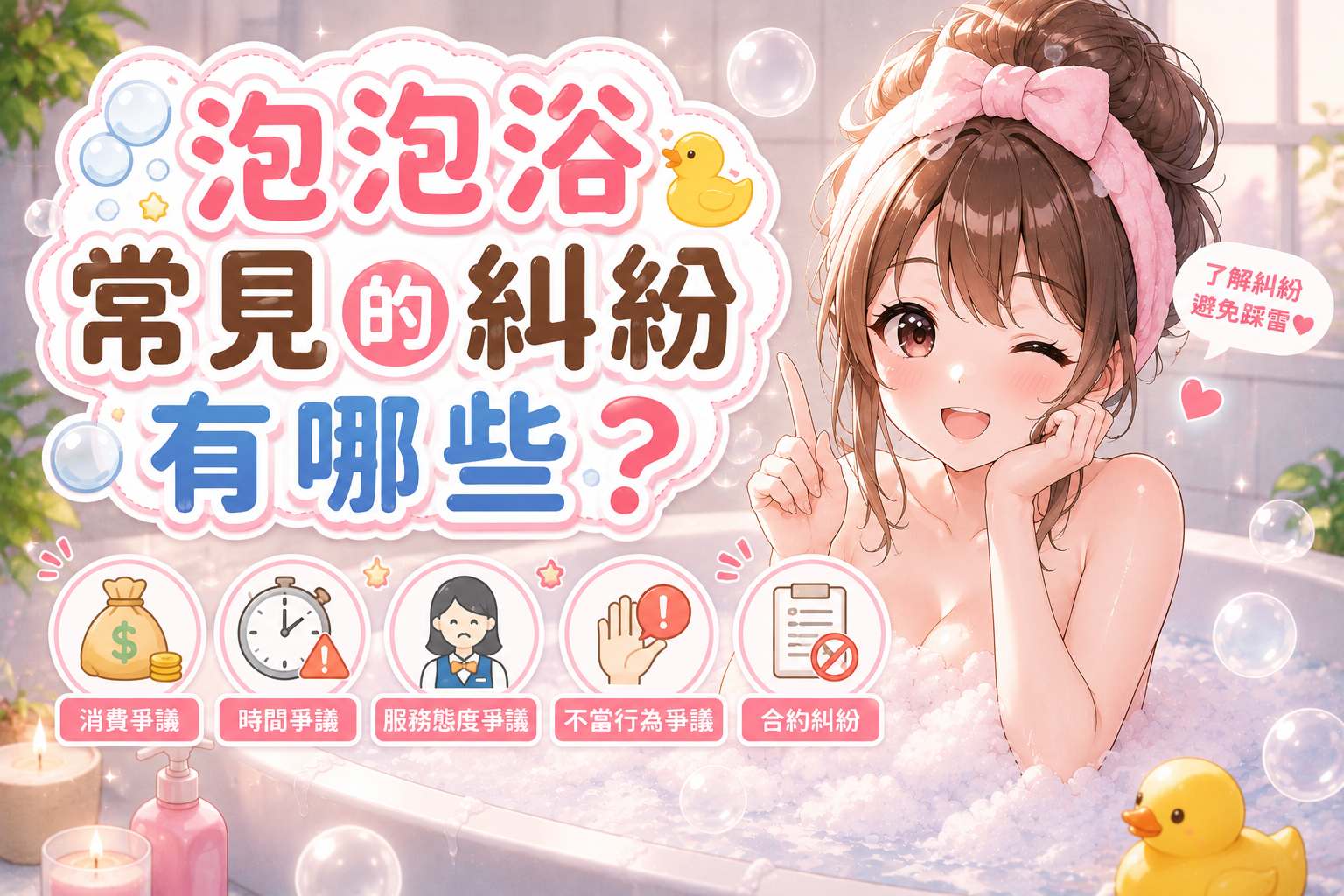
Many people think that all you have to do for Soapland is pay and go in, but in reality, more people run into problems than you might think—and most of them happen to those who think they know what they’re doing. To
summarize, the most common issues are these:
Fee-Related Disputes: The Most Common Pitfall
This tops the list of customer complaints. The prices listed on the establishment’s official website usually cover only the bath fee, but once you’re inside, they’ll tell you there are additional charges for requesting a specific attendant, service fees, and extension fees. Some places play word games—they advertise a 90-minute session, but that time includes showering, changing clothes, and the briefing, so the actual time is much shorter. The most outrageous cases involve being told at checkout that a 10% processing fee applies to credit card payments, or being charged a cleaning fee for accidentally soiling a towel.
Photos bear no resemblance to the actual person; services are severely scaled back
This is commonly known in the industry as “photo fraud.” The photos on the official website are heavily retouched to enhance the skin, but when you see the person in person, it’s a completely different person—neither the age nor the body type matches. Even more common is when the agreed-upon service is cut short: after entering the room, the girl might say, “I’m not feeling well today,” and then demand extra payment just to perform services that were originally included. This kind of discrepancy is the most likely to lead to conflict.
Not Understanding the Rules Leads to Stepping on a Landmine
There are numerous unwritten rules in the Soapland industry. Prohibited behaviors, off-limits personal questions, and unacceptable requests vary by establishment. Some customers assume that paying extra allows them to do whatever they want, only to be immediately escorted out. In severe cases, they may be blacklisted or even surrounded by male staff who demand payment of a penalty fee for violating the rules.
Miscommunication: Talking Past Each Other
Language barriers, combined with a reluctance to speak openly, often lead to misunderstandings. For example, if the intensity, pace, or acceptance of a particular aspect of the service isn’t clarified beforehand, one party might assume tacit consent while the other feels offended. The atmosphere instantly becomes awkward and reaches a freezing point, leaving both parties dissatisfied.
Disputes Over Hygiene and Valuables
Some establishments fail to maintain proper cleanliness—towels may have an odor, or bathtubs may not be scrubbed clean. Problems can also easily arise if a client insists on visiting despite having a cold or open wounds. Another common issue is the loss of valuables: without locked lockers in the room, wallets or watches left nearby can vanish in the blink of an eye, and the establishment will typically respond with nothing more than, “Please take responsibility for your own personal belongings.”
Fee Disputes and Prevention Methods
When it comes to billing disputes for Soapland, nine out of ten cases stem from guests thinking they understood the pricing, only to realize later they didn’t.
Establishments are masters at the “split-pricing trick”—making it seem very cheap at first, only for you to discover it’s a bottomless pit once you’re inside.
The 4 Most Common Billing Pitfalls:
1. The Bathing Fee Is Not the Total Cost
The official website lists a “generous” price of 20,000 yen, but that’s just the room fee. Once inside, they’ll tell you to add the girl’s service fee, the request fee, and the repeat request fee—which quickly adds up to 45,000 yen.
2. Hidden Fees for Extensions and Cancellations
As your time runs out, the girl will gently ask if you’d like to extend a bit. If you nod, you’ll be charged an extra 10,000 yen for just 10 minutes. Plus, if you cancel on the same day or are 15 minutes late, they’ll charge you a 100% cancellation fee—your money’s gone before you’ve even set foot in the room.
3. “Photo Fraud” with Price Gouging
They claim photo selection is free, but once you pick a popular girl, they suddenly demand a “special request fee” ranging from 3,000 to 5,000 yen. Credit card payments also incur extra charges—they’ll cite a 10% processing fee. If you don’t have enough cash on hand, the situation becomes incredibly awkward.
4. Exorbitantly Low “Bait Prices”
While other shops charge 60,000 yen, this one dares to advertise 15,000 yen for a 90-minute session. Don’t be fooled—once you walk in, you’ll face nonstop upselling. They’ll either try to get you to pay extra for “upgrades” or cut the service down to just a shower, leaving you to learn the hard way.
How to Avoid Payment Disputes
If you don’t want to be taken for a ride, here’s the most effective way to prevent it:
First, make sure you ask for the total cost—no matter what. Don’t just ask “How much?” Ask, “I’m bringing this amount of cash with me today—what’s the total cost, including everything, until I walk out the door?” It’s best to have the staff write it down or take a screenshot of the total price page on their official website as proof.
Second, only go to shops with clearly posted prices. Shops that dare to clearly list the total cost, fees for specific services, extension fees, and credit card processing fees at the counter usually won’t try to pull any tricks. If the pricing is vague or uses terms like “flat rate” or “starting at,” skip them altogether.
Third, don’t be tempted by bargain prices, and don’t rely on verbal promises. If you see a price that’s significantly lower than the market rate, assume it’s a scam. Always ask for the price before agreeing to any extensions or add-ons—don’t let the atmosphere sway you.
Disputes Arising from Violations of Rules and Prohibited Behaviors
In Soapland, rules are even stricter than prices. The Japanese take rules far more seriously than you might imagine; what you might consider a minor infraction is, in their eyes, crossing a red line. When such disputes arise, the customer is almost always in the wrong, and the situation is extremely awkward to resolve.
The 5 Most Common No-No Behaviors:
1. Secret photography or recording—you’re out immediately
This is an absolute red line for every establishment. Whether you leave your phone nearby, secretly hide a pinhole camera, or pretend to be replying to a message—the moment you’re caught recording, there will be no discussion. The door to your room will be kicked open immediately, you’ll be ordered to delete the footage on the spot, and in severe cases, the police will be called, and you’ll be permanently banned from all establishments in the chain.
2. Coercion and violent behavior
If a girl says no, it means no. Forcibly grabbing her wrist, shouting at her, verbally humiliating her, or demanding services explicitly prohibited by the establishment—if a girl presses the room’s emergency bell due to any of these behaviors, male staff will rush in within 30 seconds. You’ll be escorted to a small room at the front desk to discuss compensation, and the atmosphere will be far from what you’d want to endure.
3. Constantly Trying to Add Her on LINE or Ask Her Out to Dinner
Many people think that if they hit it off, they should exchange contact information or arrange an off-site transaction—but this is a major no-no at Soapland. The establishment relies on this for its livelihood; trying to bypass the venue to make private arrangements is essentially cutting off their revenue stream. If caught, you won’t just be kicked out—it will be treated as poaching, and you’ll have to pay a hefty penalty.
4. Insisting on entering while drunk, high on drugs, or with visible injuries
If you show up completely drunk—speaking loudly and unable to stand steadily—the establishment has the right to refuse entry outright, and you won’t get a refund even if you’ve already paid. If you have visible wounds or skin conditions and conceal them, the session will be terminated immediately upon discovery—and that’s exactly how disputes arise.
5. Invasive questioning
Constantly asking a girl her real name, where she lives, whether she has a boyfriend, or why she does this work is considered extremely rude in Japan’s adult entertainment industry. While you may think you’re showing concern, she will only feel harassed, causing the service to become cold and unresponsive, ultimately leading to an unpleasant experience for both parties.
Preventive Measures Against Rule Violations and Prohibited Behaviors
How can you avoid these issues? Just remember these three points:
Before entering the establishment, read the list of prohibited actions posted next to the front desk—don’t pretend you didn’t see it. Once inside the room, go by whatever the girl says is okay; if she says no, don’t ask a second time. Also, never adopt the “I’m the boss because I’m paying” mentality—here, only those who respect the rules will be treated as guests.
Disputes Arising from Miscommunication
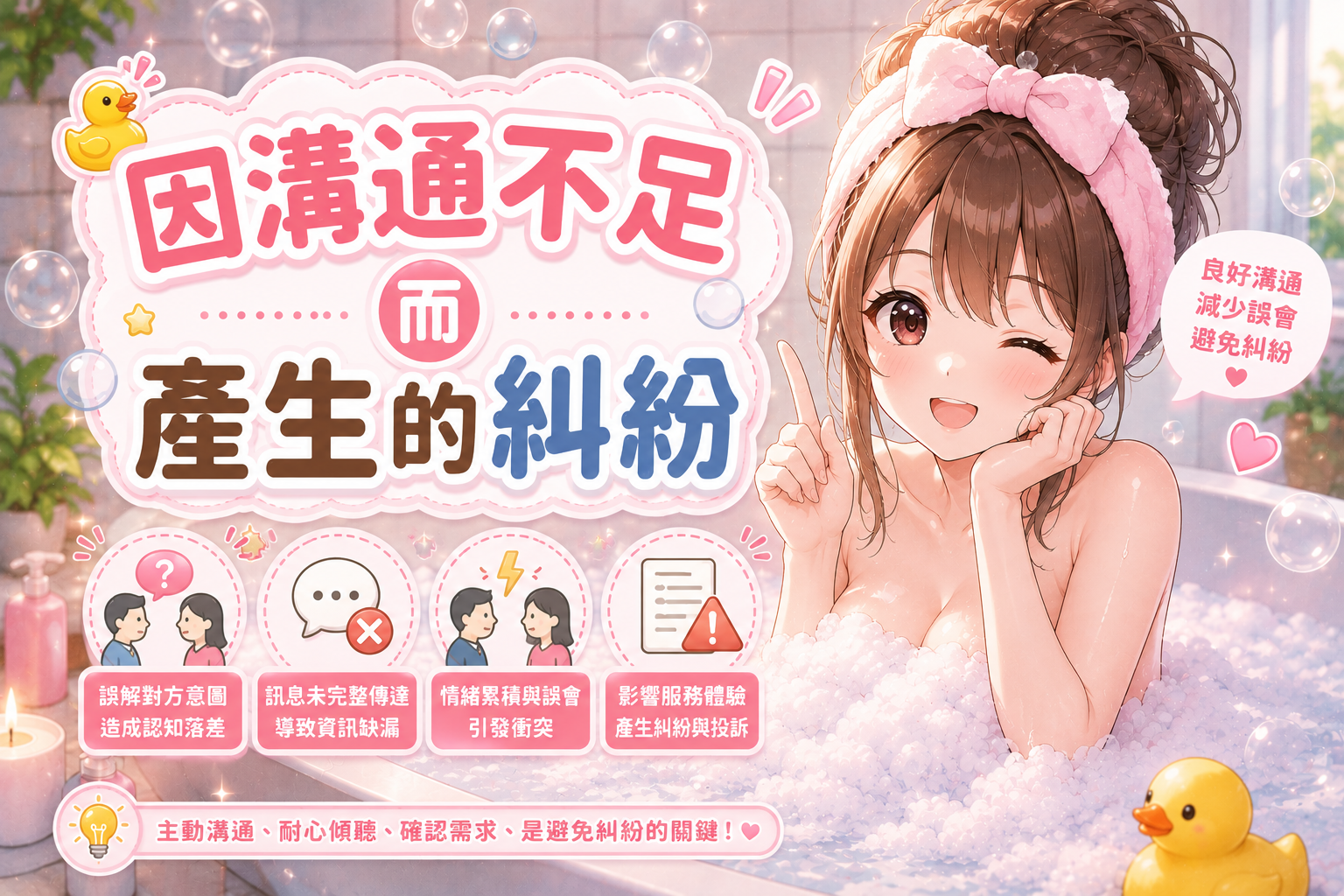
Many disputes over Soapland aren’t about who’s right or wrong—they’re simply cases of talking past each other. You think she understands, she thinks you’re okay with it, but in the end, you’re both following different scripts, leading to an unpleasant parting.
The 4 Most Common Communication Landmines:
1. Language barriers—relying entirely on gestures
A Taiwanese tourist in Japan tries to get by with just English and a few Japanese words. When the shop explains the process and you don’t understand, you just keep nodding. Once inside the room, the girl asks if there’s anything that makes you uncomfortable or that you can’t accept, and you nod again. Only when the service begins do you realize it’s nothing like you expected—and now that you want to stop, it’s incredibly awkward for both of you.
2. “I’m too shy to say no”—just agreeing to everything
Many customers, afraid of awkwardness, respond with “Whatever” or “It’s up to you” no matter what they’re asked. The problem is, the girl isn’t a mind reader—she dreads customers who just say “Whatever” the most. If the pressure is too intense, they don’t speak up; if the pace is too fast, they don’t dare to say anything. They grit their teeth and endure the entire session, only to complain about poor service at the front desk afterward. When the shop hears these disputes, all they can do is smile wryly.
3. Taking Silence as Consent
This is the most dangerous misunderstanding. If you don’t explicitly refuse, the other person might assume you’ve accepted. If you don’t explicitly agree, you might assume they’ll take the initiative. Especially in Japan, women don’t say “no” directly; instead, they use ambiguous phrases like “That’s a bit troublesome” or “This is a bit…” to refuse. Many foreign customers completely fail to pick up on these subtle hints and keep pressing the issue, which ultimately leads to accusations of coercion.
4. Keeping all your expectations to yourself without saying a word
Before leaving, you read a lot of reviews online and imagined the entire process in your head, thinking that for the price you paid, you should receive a certain level of service. But every establishment and every girl has a different style and different boundaries. Since you never voiced your expectations, the other party obviously can’t just magically provide them for you.
How to Prevent Disputes Caused by Poor Communication
Avoiding this kind of mess is actually quite simple:
Before you go in, use a translation app to prepare a few key Japanese phrases—for example, “I’m not comfortable with that,” “Please be gentler,” and “Please wait a moment.” These three phrases alone can save your life. If you feel uncomfortable during the session, you must speak up immediately using simple words—don’t just endure it.
And most importantly, if you hear hesitation in her tone, a forced smile, or she doesn’t give you a direct answer—that’s a rejection. Don’t ask a second time; change the subject immediately. That’s the best way to preserve both of your dignity. Only those who communicate clearly can prevent a transaction from turning into a dispute.
Disputes Regarding Physical Condition and Hygiene
These disputes are the most troublesome because they’re impossible to resolve through argument. Once physical or hygiene issues are involved, both parties feel like victims, and it’s difficult to provide evidence afterward. This often leads to mutual blame and makes the situation very unpleasant.
The 4 Most Common Complaints from Customers:
1. Poor cleanliness of the establishment
This is the most basic pitfall. A slippery-looking bathtub, smelly towels, sheets with the previous guest’s hair, or a musty smell in the room. In Japan, legitimate Soapland establishments actually follow strict disinfection protocols, thoroughly cleaning the room with disinfectant before and after each guest. However, when businesses are too busy to keep up or management is lax, these steps are often skipped. The moment a guest sees such conditions, their trust vanishes instantly.
2. Customers Concealing Their Health Conditions and Insisting on Entering
Fevers, colds, severe flu that hasn’t run its course, visible wounds, athlete’s foot, or active skin conditions—these are all reasons the establishment will refuse entry outright. Some customers, afraid of being turned away, insist on entering despite concealing their condition. When the attendant discovers this during the session, the service is immediately halted, no refund is given, and an argument breaks out on the spot. This isn’t just a matter of courtesy; it poses a health risk to both parties.
3. Disputes Over Body Odor and Personal Hygiene
This is the number one complaint among the girls behind the scenes. Arriving without having showered, having severe bad breath, reeking of cigarette smoke or betel nut, or having excessive body odor. Soapland involves very close physical contact, so personal hygiene is a basic courtesy. Many girls, when faced with such situations, will directly ask the customer to go back and wash thoroughly, but customers often feel rejected and humiliated—especially since they’re paying for the service—which is how conflicts arise.
4. Mutual Blame Over Post-Service Health Concerns
This is the most difficult issue to handle. If a client experiences physical discomfort a few days after the service, they immediately assume it’s the establishment’s fault, while the establishment insists that all procedures were disinfected and proper protective measures were taken, so it’s definitely not their problem. With both sides sticking to their own versions of the story and no evidence to support either claim, the situation often escalates into an online mudslinging match.
Ways to Prevent Disputes Over Health Issues and Hygiene
How can you avoid these disputes?
When choosing a parlor, look for one that openly lists its disinfection procedures on its official website and uses medical-grade cleaning products. When reading reviews, pay special attention to whether anyone mentions the environment being dirty. Before you go, take care of your own hygiene: don’t go if you have any open wounds, and cancel your appointment if you’ve been drinking heavily the day before, stayed up late, or are feeling unwell. Before entering the parlor, make sure to wash up thoroughly at your hotel, brush your teeth, and manage any body odor—this is the most basic form of respect for the other party.
If you really feel something is off during the session—whether there’s an odor or it doesn’t look properly cleaned—don’t put up with it. Politely ask the provider to address the issue or report it to the front desk. Protecting yourself is always more important than enduring an uncomfortable situation.
How to Handle Disputes and Where to Seek Assistance
If a dispute arises during a Soapland session, the worst thing you can do is lose your temper on the spot. Once you resort to physical altercations or raise your voice, you’ll go from being in the right to being in the wrong—and in Japan, this puts you at a significant disadvantage. Remember these steps for the correct procedure.
Four steps to protect yourself when a dispute arises on the spot:
1. Never resort to physical violence, and do not shut the door and raise your voice
No matter how angry you are, physical altercations are taken very seriously in Japan. If the other party calls the police, the police will always prioritize dealing with the person who initiated the physical contact. First, calm yourself down and ask to discuss the matter in the well-lit reception area—do not discuss it in a closed room.
2. Immediately preserve all evidence
Take photos of the price list at the front desk, the receipt in your hand, and screenshots of the prices from the official website. If the other party mentions any fees or demands payment under any pretext, ask them to write it down on paper and give it to you. Without evidence, no one will believe your side of the story afterward.
3. Don’t just argue with the girl—go straight to the person in charge
The girl has no authority to set prices; arguing with her is pointless. Ask to speak directly with the store manager or supervisor. In a calm tone, explain that the charges differ from what was agreed upon beforehand and request a detailed breakdown. In Japan, this is called “theory”—the calmer you remain, the less likely they are to try to pull a fast one.
4. If you feel you’re being threatened or scammed, immediately say you’re calling the police
If you find yourself locked in a small room, surrounded by several men, or being demanded to pay a high “penalty fee,” this is no longer a consumer dispute—it’s intimidation. In this situation, immediately pick up your phone and say you’re calling the police (110); this will usually make them back down significantly. Do not pay the money yourself just to settle the matter—once you’ve paid, it will be much harder to get it back.
Where to Turn for Help During a Dispute
If you really can’t reach an agreement, who can you turn to for help?
In Japan:
-
Consumer Life Center: Japan’s nationwide consumer hotline, 188, specializes in handling disputes involving unclear pricing or overcharges and can provide advice on negotiation in Japanese.
-
Police: If you encounter violence, threats, theft, or secret filming, call 110 directly to report it. Japanese police are well-accustomed to handling disputes at adult entertainment establishments and will handle the matter impartially.
-
Adult Entertainment Industry Associations: Some large chains have customer complaint email addresses at their headquarters; filing a complaint with headquarters is usually more effective than arguing with a branch location.
If you’re a Taiwanese tourist:
Taipei Economic and Cultural Representative Office in Japan: If you face language barriers or have concerns about your personal safety, contact the representative office to request assistance with translation or legal information. Be sure to send your passport information and the establishment’s address to friends or family in Taiwan as a backup.
One final piece of advice: 90% of disputes at Soapland parlors can be avoided before you pay. If something feels off while you’re there, just walk out without paying—that’s the best way to minimize your losses. Once the money is paid, getting it back becomes at least ten times harder.
How to Identify Trustworthy Establishments
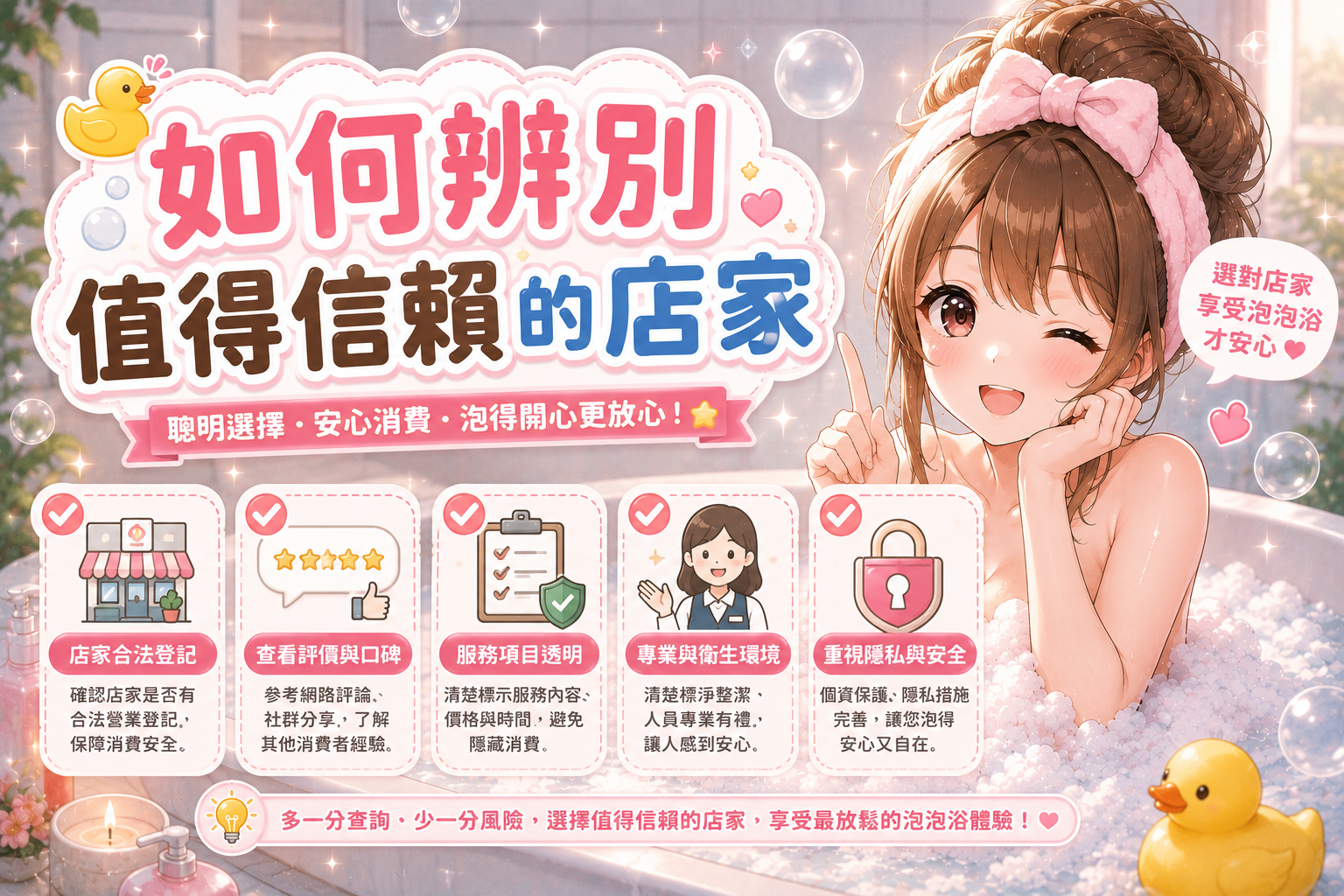
Soapland is a murky business. Whether you’ll get ripped off can actually be determined 80% of the time by checking the official website and customer service before you even pay. Legitimate establishments all share several common traits.
1. They clearly state the total price and don’t use underhanded tactics to split the bill
A trustworthy establishment will always list the total price on its official website. The cost of the bath, service fee, and request fee—the grand total—is clearly laid out at a glance. They’ll also clearly state extension fees, credit card processing fees, and cancellation fees for requests. In contrast, places that only list “Bath fee starting at 5,000 yen” followed by a small asterisk (*) are the ones planning to gradually add charges once you’re inside.
2. Comprehensive information on the official website—nothing to hide
Reputable establishments will publicly disclose their business hours, address, adult entertainment business license number, prohibited activities, and hygiene management procedures. In particular, establishments that explicitly state “No minors allowed” and require ID verification are adhering to Japan’s Adult Entertainment Business Act and are less likely to engage in misconduct. If a site has no information whatsoever and only features a bunch of photos of beautiful women, treat it with skepticism.
3. Look at the details in reviews, not just the star ratings
Don’t just look at the positive reviews posted on the establishment’s own website.Check Japanese adult entertainment review sites and Google Maps reviews, focusing on what the negative reviews say. If negative reviews mainly mention that the girls are cold or aloof, that’s a subjective impression and not necessarily a red flag. However, if many people report being overcharged, photos that don’t match reality, or being taken into a small room for a private conversation, these are systemic issues—and you should absolutely avoid such places. Also, reviews that provide detailed descriptions of the process and environment are usually ten times more reliable than a single comment saying “it was great.”
4. Customer service responds professionally and doesn’t rush you to pay
When you call or use online chat to inquire, a reputable establishment will patiently explain the total cost, the process, and the rules again—and may even proactively remind you of any prohibited activities. If they rush you to make a reservation, constantly ask when you’ll arrive, or claim there’s an “immediate” discount that will expire if you don’t come right away, these are places under heavy sales pressure, and the chances of being subjected to aggressive sales tactics once you’re inside are extremely high.
5. Never go with street touts
In Japan, soliciting customers on the street is illegal. People who approach you near train stations or on the street claiming to have a “great place to recommend” are 100% a red flag—they’ll take you to shady establishments that pay them the highest commissions. Truly good businesses don’t need to solicit customers on the street; customers come to them on their own.
Checklist to Avoid Disputes
Whether or not something goes wrong at a Soapland can actually be determined within five minutes before you even leave home. Save this checklist and go through it item by item before entering the establishment—it’ll help you avoid 90% of the pitfalls.
☐ Total Cost Confirmation: Does the official website list the total price, or just the bath fee
? ☐ Fee Breakdown: Are charges for specific service requests, time extensions, credit card processing fees, and cancellation fees clearly listed
? ☐ Time Definition: Does the 90-minute session start when you enter the room or when you enter the establishment
? ☐ Establishment Reviews: Check negative reviews on at least two Japanese review sites—see what people are complaining about
. ☐ Hygiene Guidelines:Are disinfection procedures, towel replacement, and the requirement for guests to shower first clearly stated?
☐ Confirm the Total Again: Ask the staff member to verbally state the total amount you’ll pay today, and have them point to the price list
for you ☐ Payment Methods: Can you pay by credit card? Is there a surcharge for credit card payments? Do they accept payment methods other
than Japanese yen cash? ☐ Prohibited Actions:Read through the “Prohibited Actions” poster next to the front desk; ask
immediately if anything is unclear ☐ Valuables: Check if there are lockers available; if not, do not bring valuables into the room
☐ Disclosing Health Conditions: If you have any wounds, a cold, or skin irritation, speak up proactively; don’t push yourself to
proceed☐ Key Phrases for Communication: Prepare these three Japanese phrases in advance
: “Gently,” “Wait a moment,” and “No”☐ Establishing Boundaries: If a girl says “no,” don’t ask a second time; silence or a smile without a response means refusal☐
Personal Hygiene: You must take a shower as soon as you enter; do not skip this step. It’s basic etiquette and a way to protect yourself
.☐ Receipt Details: Make sure you receive a receipt, and verify that the amount matches what was agreed upon beforehand.
☐ Personal Belongings: Check your cell phone, wallet, and ID thoroughly before leaving
.☐ No Private Transactions: Do not exchange contact information or arrange to meet outside the establishment; this is the biggest source of disputes.
If you still feel something’s off after going through this checklist, don’t go in. An establishment that lets you check everything at your own pace and patiently answers your questions is a reputable one that isn’t afraid of scrutiny.
Summary
Disputes that arise during Soapland sessions are, at their core, never a matter of luck—they stem from a lack of information.
Disputes over fees happen because you pay without asking for the total amount. Disputes over rules happen because you act like a big shot just because you’re paying, forgetting to respect the other party’s boundaries. Communication disputes happen because you’re too shy to speak up, or you mistake the other person’s silence for consent. Hygiene disputes occur when both parties forget that cleanliness and health are the most important foundations of this kind of intimate service.
To ensure a worry-free and enjoyable experience, there are really only three principles to follow.
-
First, doing your homework beforehand is more important than anything else. Prices, rules, and reviews—check all of these thoroughly before you walk in. The more transparent a shop’s official website is—and the more willing it is to lay out the hard truths upfront—the safer it usually is.
-
Second, prioritize respect over consumption. Obey the rules: no secret filming, no coercion, and no prying into personal matters. Only when you respect the girl’s boundaries will she reciprocate with professionalism. Any attempt to use money to bend the rules is the beginning of a dispute.
-
Third, protecting yourself always comes first. Confirm the total amount, keep your receipt, don’t go if you’re not feeling well, and walk out immediately if something feels off. If you encounter threats or fraud, don’t try to handle it on your own—stay calm, confront the manager, and if necessary, call the police or seek assistance from your embassy.
Soapland is a legal form of adult entertainment in Japan, but legality doesn’t mean there are no risks. Only those who know how to avoid pitfalls can spend their money wisely and enjoy the service instead of ending up frustrated. Remember, people who run into trouble aren’t usually those who don’t know how to play the game—they’re the ones who are too confident and skip all the necessary precautions.
Fu-ZoKlook x JNC Official LINE & Major Social Media Platforms
If you have any questions about Japan’s adult entertainment scene or making reservations, or if you’d like to consult with us,
feel free to click the image below to join our official LINE account. JNC will provide you with free consultation services ♥
We’ll continue to update with more knowledge and content related to Japan’s adult entertainment scene, so please stay tuned and keep supporting us, fellow enthusiasts!
You can also follow our social media accounts to stay up-to-date on the latest news about Japan’s adult entertainment scene 👇
👉Fu-ZoKlook x JNC on Major Social Media Platforms