What Are Japan’s “Married Woman-Themed” Soaplands (人妻系ソープランド)?
Are There Really Only Married Women Working There?
When searching for Japanese Soapland (Soapland/ソープランド), you’ll likely come across a category that leaves Chinese readers thinking, “I can read every character, but I don’t necessarily understand what it means”:
“Married Woman-Themed.”
When seeing this for the first time, most people’s initial reaction is probably:
“Wait… so the place is full of other people’s wives?”
The answer is actually:
Not necessarily.
While “hitodzuma” (Married Woman) generally means “married woman” or “someone else’s wife” in everyday Japanese, within the context of Japan’s adult entertainment industry, the “Married Woman” genre also represents a business concept, a character archetype, and a market category.
Job listings and introduction pages for Japanese “Married Woman” establishments—which are still being updated as of 2026—clearly state that while the shop’s concept and main focus is “Married Women,” this does not mean all female staff members must actually be married. In fact, as long as a woman fits the mature, sophisticated, or “Married Woman” aesthetic the shop wishes to project, she may be categorized as part of the “Married Woman” genre even if she is unmarried.
So, if this is your first time encountering Japanese “Married Woman”-themed Soaplands, the most important first lesson is to understand:
The “Married Woman” category is a “style classification,” not a guarantee of the women’s actual marital status.
This article starts with “What exactly is the ‘Married Woman’ style?” to help you understand once and for all how it differs from regular establishments, the “Mature Woman” style, and the “older sister” style, as well as highlight the most common information pitfalls foreign travelers tend to encounter when reading Japanese websites!
What Are “Married Woman-Themed” Soaplands?
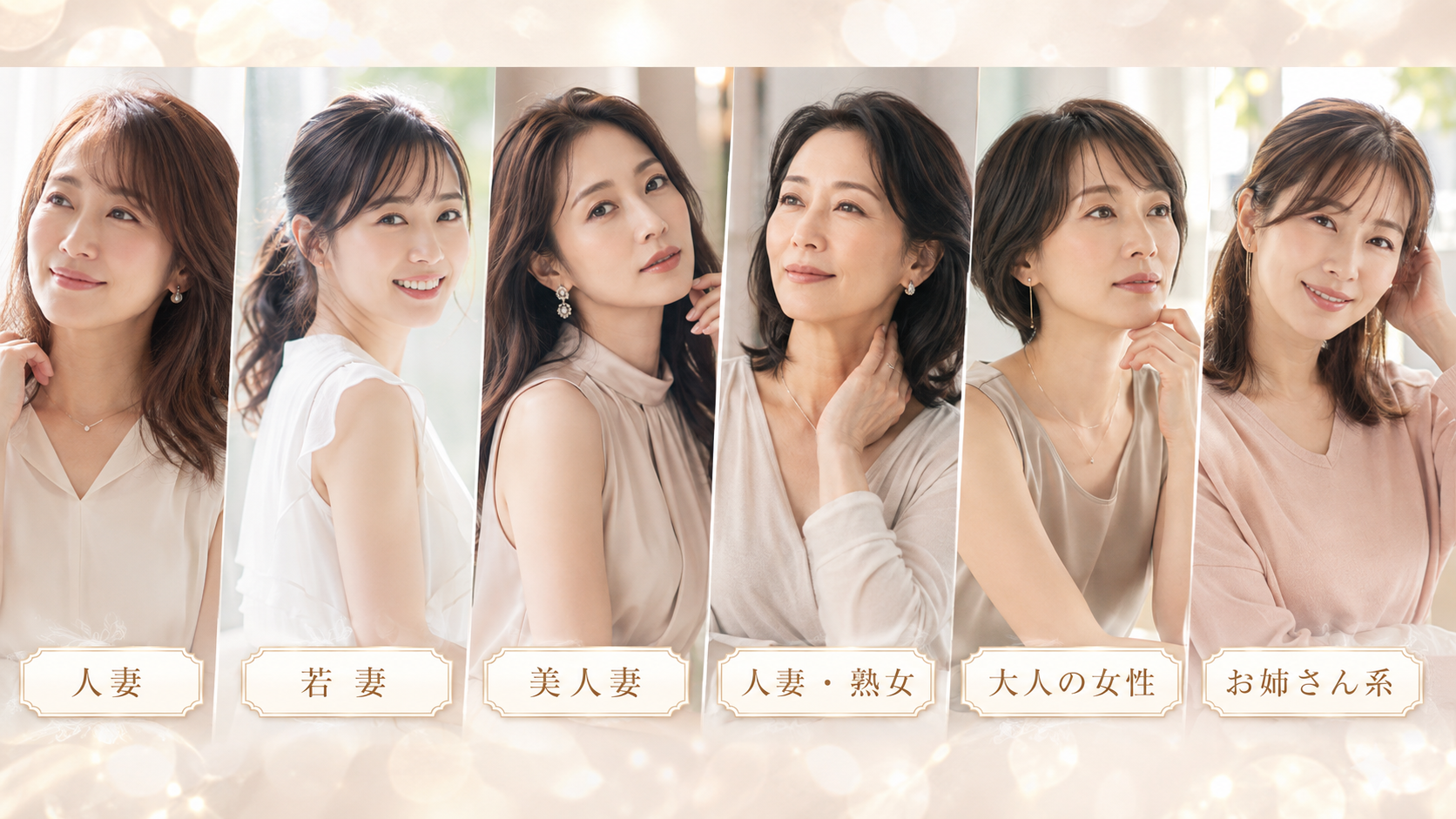
So-called “Married Woman-Style Soaplands” (specialty Soapland shops) can be understood as:
Soaplands where “Married Woman style, sophisticated charm, mature appeal, and the gentle warmth of a homemaker” are central to the establishment’s concept.
On Japanese websites, you’ll often see terms like:
“Married Women,” “Young Married Women,” “Beautiful Married Women,” “Married Women/Mature Women,” “Adult Women,” and “Older Sister-Style,” among other terms.
These aren’t entirely the same categories, but there is significant overlap.
For example, “young Married Woman” typically conveys the image of a relatively young Married Woman; “Mature Woman” places greater emphasis on age; and “older sister type” tends to refer to attractive, older women or mature ladies.
The aspect of “Married Woman-style” that is most likely to be misunderstood by foreign readers is that:
In Japanese, it indeed refers to both a specific social status and a conceptual image within the industry.
Also, keep in mind that there’s no hard-and-fast rule stating:
“The ‘Married Woman’ category must start at ___ years old.” Nor can one say: “Just because it says ‘Married Woman,’ it means she’s actually married.”
What’s the difference between “Married Woman-Style” Soapland specialty shops and regular shops?
The biggest difference with Soapland specialty shops usually isn’t the format of the Soapland service itself, but rather:
the establishment’s goal of helping you “quickly find the type of woman you’re looking for.”
General parlors may offer a variety of styles—such as Pure, idol, older sister, Chubby, and Mature Woman—all at once; “Married Woman” specialty parlors, however, place “adult-style, Married Woman vibe, and Mature Women” at the very core of their offerings.
If we also include the often-confused “Mature Woman” and “older sister” (お姉さん系) categories, it becomes easier to understand:
|
Type |
Common Images |
Perceived Age |
Does it represent a |
|
Married Woman Style |
Married Woman vibe, mature, natural and sophisticated |
Typically in their late 20s to 40s, but this varies by establishment |
may vary |
|
"As-If-Married" Style |
A style that evokes a younger "Married Woman" vibe |
They are usually relatively young |
Not necessarily |
|
Mature Woman style |
Mature, sophisticated, and possessing the charm of a woman of a certain age |
Often more mature than the “Married Woman” style, but there is no clear-cut distinction |
No direct connection to marriage |
|
"Onesan" Type |
Beautiful older sisters, sophisticated women |
Typically falls between the “young” and “Mature Woman” types |
Has no direct connection to marriage |
|
General establishments |
A mix of various styles |
Wider range |
Not necessarily |
That is also why Japanese websites sometimes simply combine the categories into a single heading: “Married Women & Mature Women”
Because there’s naturally a great deal of overlap between actual age and a person’s aura.As of 2026, there are still “Married Women & Mature Women” establishments that primarily recruit women in their 30s, 40s, and 50s, and some specialty shops explicitly target the 30–40 age range.
If you’re drawn to women with that “Married Woman with a Family” vibe, start by looking for specialty shops in this category, then browse individual profiles to find the one that catches your eye most—and make a reservation!
Highlights of “Married Woman”-Themed Soapland Establishments
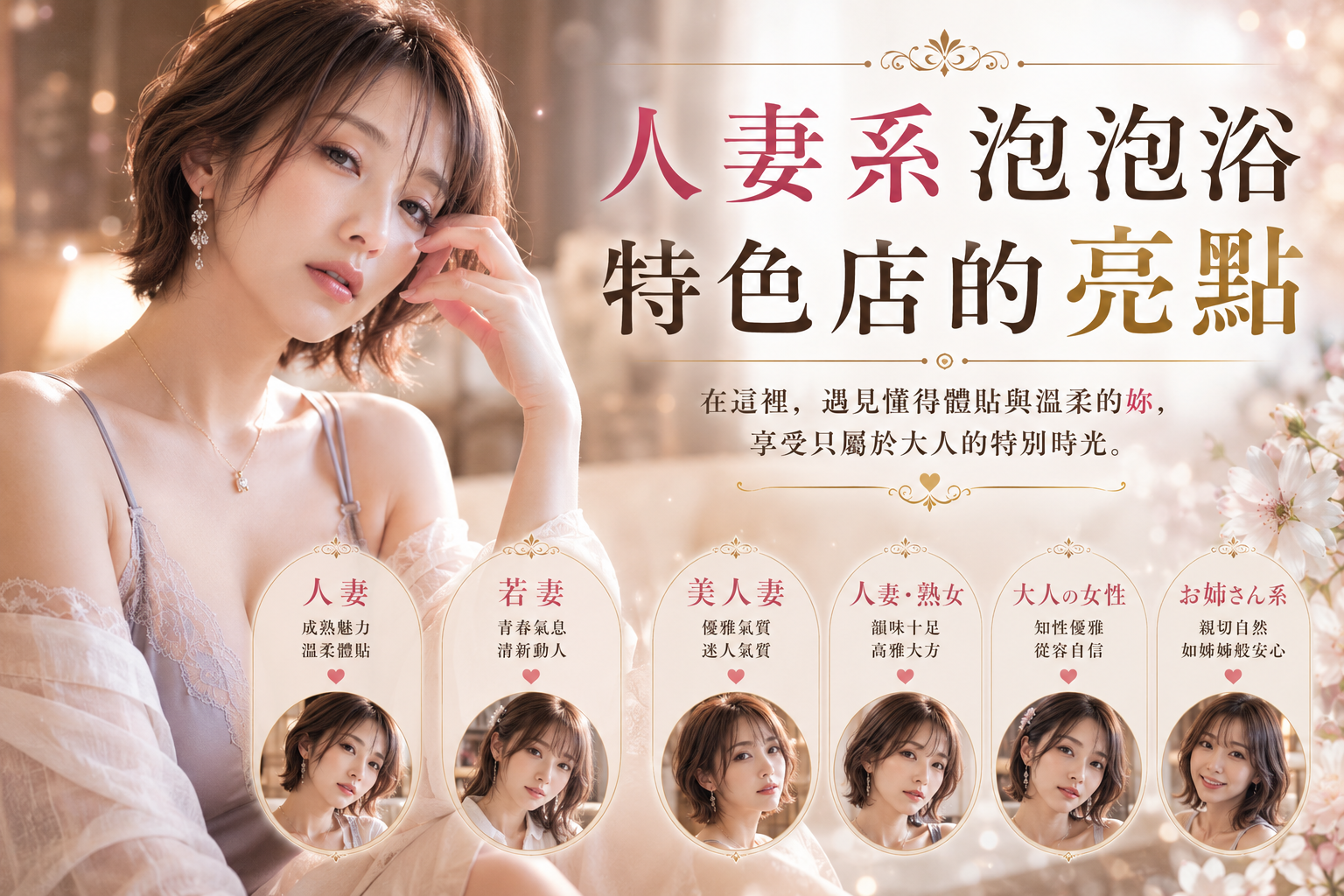
Features women embodying the “Married Woman” concept as their main theme
What the “Married Woman” genre really sells isn’t just “age.”
What’s more important is:
the overall persona.
For example, even among women around 35 years old, some may embody a Pure, youthful Married Woman vibe, others a fashionable beauty, while still others clearly lean toward the Mature Woman type.
That’s why you might see further subcategories on Japanese websites, such as: “innocent Married Woman,” “beautiful Married Woman,” “young Married Woman,” “Married Woman/Mature Woman,” and “older-sister-type Married Woman.”
In other words:
The “Married Woman” genre is a broad category for specialty shops, which can be further subdivided into many different aesthetics and types.
You can choose from women of different age groups
There is no uniform age restriction for “Married Woman” establishments across Japan.
According to 2026 data on “Married Woman” establishments, women aged 30–40 are indeed a very common core demographic, but job postings in Japan also feature the concept of “young married women” (approximately 20–30 years old), and it’s even possible to find women in their 50s and 60s categorized under “Married Women” or “Mature Women.”
Therefore: the “Married Woman” genre ≠ exclusively women around age 30. And: the “Married Woman” genre ≠ women who are actually married.
The “Married Woman” genre emphasizes: the character, identity, concept, and a presentation that evokes fantasy and imagination.
Therefore, if your preference is actually very clear—for example:
“I prefer women in their 30s,”
then looking directly at age will be more effective than just checking the “Married Woman” tag.
But if you prefer the thrill of imagining the other person’s identity and immersing yourself in the concepts and atmosphere created by the establishment, trying out a specialty “Married Woman-style” shop is also a great option!
Even within the “Married Woman” genre, the business concepts and the atmosphere created by the Girls can vary greatly from one establishment to another.
This is also an important point to keep in mind when searching for “Married Woman”-themed Soaplands.
Some shops may specialize in natural-looking “Married Women” in their 30s to 40s
while others may lean more toward: “young wife” specialties
Others might feature a “Married Woman + Mature Woman” theme
There are even establishments featuring: “Married Women + Office Ladies” or a “mature older sister” vibe
and various other concepts and selection criteria.
Although many shop names include “wife,” “Married Woman,” or “WIFE,” at best they can only tell you what direction the shop is trying to take.
But since everyone’s imagination and perception of “Married Women” differs, you’ll have to embrace the surprise of opening a mystery box to discover what kind of women are actually there and whether they truly represent the identity the name suggests.
Who would you particularly recommend these “Married Woman”-themed Soapland specialty shops to?
If you’ve spent ages browsing Japanese websites and keep thinking:
“Idol-style, sweet-style, or schoolgirl-style girls in their early 20s just aren’t my thing,”
But you’re more drawn to:
pretty older women, mature makeup looks, a natural, down-to-earth vibe, and sophisticated women. Then the “Married Woman” category is definitely worth exploring first.
Another scenario is:
you enjoy having fantasies, a certain atmosphere, or specific kinks before the service begins—in which case, specialty “Married Woman” establishments are perfectly suited to satisfy your desires and preferences.
For foreign travelers, when visiting a “Married Woman” specialty shop, don’t go in thinking, “I’m going to find a Married Woman.”
Instead, adjust your mindset to: “Let’s experience the atmosphere and excitement of a service that captures the essence of a Japanese Married Woman!”
You’ll enjoy it even more that way!
How to Choose a “Married Woman”-Themed Soapland Parlor? Pay Attention to These Three Things When Researching Options

With so many establishments online, we recommend starting your search near the hotel where you’ll be staying. If you’re unsure how to choose, feel
free to join JNC—we’re here to help.
Here are three tips to help ensure you don’t overlook any important factors during your selection:
① Focus on profiles rather than photos
Once you’ve found a shop and Girls you’re interested in, the first step is to check:
the roster of available escorts and their profiles
Common information may include: age, height, B/W/H measurements, photos, working hours, self-introductions, agency recommendations, “newcomer” labels, and information regarding booking specific hostesses
At specialty establishments like these, some may even post the Girls’ recent diaries to provide customers with more information.
A reminder: “Married Woman vibe” and “actually married” are not the same thing. So don’t worry about breaking the law—it’s simply a marketing gimmick used by the establishment.
There are indeed articles online speculating on the percentage of “Married Women” in these establishments, but such figures lack representative industry statistics and therefore cannot be considered reliable facts.
Establishment photos are often retouched, so it’s more important to read the Girls’ profiles or customer reviews than to rely on photos!
② Confirm the Establishment’s Concept (Business Philosophy, Unique Features)
This step is actually more important than many people realize.
Take a look at the establishment’s: Concept, About, and Introduction pages
This will often help you determine:
whether it specializes in “young married women in their late 20s to 30s”
or “Married Women in their 30s to 40s”
or “Married Women & Mature Women”
This information gives you a much more accurate sense of the age range or market positioning than a single phrase on a third-party site like “Married Woman Club,” and it makes it easier for you to find what you’re looking for.
③ Reviews: Look at the “specific content,” not just the ratings
Reviews can help you fill in the gaps in information not found in official profiles.
Content worth paying attention to includes:
-
Whether the staff’s service was clear
-
Whether the booking process went smoothly
-
Whether the pricing is easy to understand
-
How comfortable the in-store environment is
-
How well communication flows
-
How the photos compare to the actual experience
-
Overall attitude
Foreign travelers, in particular, should prioritize looking for recent reviews from other foreigners.
For example:
-
Do you need translation software?
-
Level of English/Chinese
-
Price Satisfaction (Are there any unexpected surcharges?)
-
Staff service process
This information is usually more useful to foreign travelers than just a five-star rating.
Keep one thing in mind when reading reviews:
A positive review isn’t a guarantee, and a negative review isn’t the final word.
What’s worth paying attention to is whether the same issues keep popping up in multiple recent reviews!!!
Key Points for International Travelers to Keep in Mind When Using Services
1. Well-known Soapland specialty shops may not necessarily be willing to accommodate foreign travelers
This is the most important point. A shop’s unique positioning and reputation are completely separate from its policy on accommodating foreigners.
As of August 2026, some popular Soapland shops still explicitly state in their public rules:
“We do not accept foreigners,” meaning they refuse service to foreigners.
Therefore: Do not make assumptions based on the location’s popularity as a tourist destination, the establishment’s reputation, or the type of specialty shop.
Be sure to double-check before making a formal reservation!
If you’re unsure whether a particular establishment accepts foreign customers, feel free to let JNC help you determine that!
2. “Foreigners Welcome” Does Not Mean “Chinese Spoken”
This is another point that foreign travelers often get confused about.
The fact that a shop accepts foreign tourists may simply mean that the shop is willing to welcome foreign guests.
It does not necessarily mean they have:
-
Chinese-speaking staff
-
An official Chinese-language website
-
Chinese-language phone support
In recent reviews of soaplands by foreign visitors, it’s common to see comments such as: “Translation software is required,”
as well as comments such as “The women speak excellent English”—reflecting completely different language situations.
Therefore, it’s best to address this in two separate questions:
Can foreigners
use this service?
Is it okay if I don’t speak Japanese?
3. How do I make a reservation?
In recent years, booking adult services in Japan has primarily been done through:
phone reservations. If you’ve contacted them via social media or messaging services and haven’t received a response, feel free to contact JNC to make a phone reservation for you!
If you wish to make a reservation on your own, international travelers need to confirm the following in advance:
-
Does an online reservation count as a confirmed booking?
-
Is a reservation made through social media or chat?
-
Is it mandatory to provide a Japanese phone number?
-
Are there special booking methods for foreigners?
Don’t just look up a restaurant only to arrive in Japan and discover you can’t complete the reservation, leaving you with a disappointing experience.
Summary
To put it simply:
"Married Woman-Style" Soapland is a category of Japanese Soaplands whose main concept centers on “women with a ‘Married Woman’ vibe, a mature and sophisticated aura, and a gentle, family-oriented feel.”
But what’s truly important to remember is:
“Married Woman-Style” does not mean that all the women at the establishment are actually married.
It’s more akin to a combination of: genre label + character image + shop concept within the Japanese adult industry.
Indeed, judging from search results in recent years, what people really want to know goes beyond simply “What is the ‘Married Woman’ genre?”
Search intent is now increasingly focused on:
“Are they really all Married Women?”
“What age range is the ‘Married Woman’ category? Are they very old?”
“How is it different from the ‘Mature Woman’ genre?”
“Can foreigners use it?”
These questions.
So for foreign travelers experiencing Japan’s nightlife for the first time, the most important thing isn’t actually memorizing a bunch of category names.
Rather, it’s about understanding that:
The “categories” on Japanese websites often describe a style, not verify a woman’s actual identity.
Once you grasp this, when you come across terms like “Married Woman,” “Young Wife,” “Mature Woman,” “Beautiful Mature Woman,” or “Older Sister Type,” you won’t find yourself in a situation where “even though I can read all the kanji, I completely misunderstood what they mean.”
Fu-ZoKlook x JNC Official LINE & Major Social Media Platforms
If you have any questions or would like to consult about Japanese adult entertainment or making reservations,
feel free to click the image below to join our official LINE. JNC will provide free consultation services for everyone ♥
We’ll continue to update with more knowledge and content related to the Japanese adult entertainment industry, so please stay tuned and keep supporting us, fellow enthusiasts!
You can also follow our social media accounts to stay up-to-date on the latest news about the Japanese adult entertainment industry 👇
👉Fu-ZoKlook x JNC on Major Social Media Platforms